Water reflecting NASA Artemis II SLS & Orion moon rocket arriving at the doors to the Vehicle Assembly Building at NASA’s Kennedy Space Center in Florida the evening of Feb. 25, 2026 after 7 p.m. – after rolling back from Launch Complex 39B. NASA will repair blockages of helium flow to the interim cryogenic propulsion stage (ICPS) upper stage required for purges and fuel tank pressurization to launch the rocket. Once complete the SLS rocket will roll back to pad 39B to launch four astronauts around the Moon and back for Artemis II test flight. Credit: Ken Kremer / Space UpClose
KENNEDY SPACE CENTER, FL – NASA’s SLS (Space Launch System) and Orion spacecraft mega moon rocket for the Artemis II crewed moonshot mission completed its rollback from launch pad 39B to the VAB where it arrived around 8 p.m. EST, Feb. 25, at NASA’s Kennedy Space Center in Florida – to fix the helium flow interruption issue detected in the ICPS upper stage during testing overnight Feb. 21 at Launch Complex 39B.
Enjoy our multiple Galleries of Rollback photos for Space UpClose from the team of Ken Kremer and Jean Wright – which will be posted in several galleries
NASA Artemis II SLS & Orion moon rocket arriving at the doors to the Vehicle Assembly Building at NASA’s Kennedy Space Center in Florida the evening of Feb. 25, 2026 after 7 p.m. – after rolling back from Launch Complex 39B. NASA will repair blockages of helium flow to the interim cryogenic propulsion stage (ICPS) upper stage required for purges and fuel tank pressurization to launch the rocket. Once complete the SLS rocket will roll back to pad 39B to launch four astronauts around the Moon and back for Artemis II test flight. Credit: Ken Kremer / Space UpClose
While in the assembly building, technicians will not just troubleshoot and fix the helium flow issue to the rocket’s upper stage, but also used the time to simultaneously replace batteries on the rocket’s upper stage, core stage, and solid rocket boosters as well as service its flight termination system.
Rolling back from Launch Pad 39B to the Vehicle Assembly Building at NASA Kennedy was delayed a few days by poor weather
The approximately 4-mile trek took approx. 10 ½ hours – similar to rollout on Jan. 17.
NASA Artemis II SLS & Orion moon rocket arriving at the doors to the Vehicle Assembly Building at NASA’s Kennedy Space Center in Florida the evening of Feb. 25, 2026 after 7 p.m. – after rolling back from Launch Complex 39B. NASA will repair blockages of helium flow to the interim cryogenic propulsion stage (ICPS) upper stage required for purges and fuel tank pressurization to launch the rocket. Once complete the SLS rocket will roll back to pad 39B to launch four astronauts around the Moon and back for Artemis II test flight. Credit: Ken Kremer / Space UpClose
Now back in the VAB, teams will immediately begin work to install platforms to access the area of the helium flow issue in the rockets ICPS upper stage to diagnose and fix it
NASA Artemis II will launch four astronauts around the Moon and back on a 10 days test flight – on the first mission to send humans to the Moon in over 50 years since Apollo 17 in Dec. 1972.
The Helium clog forced the rollback which also forced an Artemis II launch delay from early March to the NET early April window – TBD.
NASA’s Artemis II SLS (Space Launch System) rocket with the Orion spacecraft rolls back Wednesday, Feb. 25, 2026, to the Vehicle Assembly Building at NASA’s Kennedy Space Center in Florida to troubleshoot flow of helium to rocket’s interim cryogenic propulsion stage (ICPS) upper stage. Once complete SLS rocket will roll back to Launch Complex 39B to launch four astronauts around the Moon and back for Artemis II test flight. Credit: Ken Kremer / Space UpClose
A livestream of the rollback was streamed on the agency’s YouTube channel.
The quick timing of the rollback also preserves NASA the option of preserving the best possibility to launch Artemis II in the April launch window – which extends from April 1 to April 6
Artemis II Mission Availability
This unfortunate problem comes right after NASA completed a fully successful cryogenic fueling test and simulated launch countdown test of its SLS (Space Launch System) mega moon rocket during the 2nd attempt at a wet dress rehearsal (WDR) on Thursday, Feb. 19 at the agency’s Kennedy Space Center in Florida.
NASA’s Artemis II SLS rocket and Orion spacecraft rolls back Wednesday, Feb. 25, 2026, to the Vehicle Assembly Building at NASA’s Kennedy Space Center in Florida to fix flow of helium to rocket’s upper stage. Credit: Ken Kremer / Space UpClose
NASA’s Artemis II SLS (Space Launch System) rocket with the Orion spacecraft rolls back Wednesday, Feb. 25, 2026, to the Vehicle Assembly Building at NASA’s Kennedy Space Center in Florida to troubleshoot flow of helium to rocket’s interim cryogenic propulsion stage (ICPS) upper stage. Once complete SLS rocket will roll back to Launch Complex 39B to launch four astronauts around the Moon and back for Artemis II test flight. Credit: Ken Kremer / Space UpCloseNASA’s Artemis II SLS (Space Launch System) rocket with the Orion spacecraft rolls back Wednesday, Feb. 25, 2026, to the Vehicle Assembly Building at NASA’s Kennedy Space Center in Florida to troubleshoot flow of helium to rocket’s interim cryogenic propulsion stage (ICPS) upper stage. Once complete SLS rocket will roll back to Launch Complex 39B to launch four astronauts around the Moon and back for Artemis II test flight. Credit: Ken Kremer / Space UpCloseNASA’s Artemis II SLS (Space Launch System) rocket with the Orion spacecraft rolls back Wednesday, Feb. 25, 2026, to the Vehicle Assembly Building at NASA’s Kennedy Space Center in Florida to troubleshoot flow of helium to rocket’s interim cryogenic propulsion stage (ICPS) upper stage. Once complete SLS rocket will roll back to Launch Complex 39B to launch four astronauts around the Moon and back for Artemis II test flight. Credit: Ken Kremer / Space UpClose
NASA’s Artemis II SLS (Space Launch System) rocket with the Orion spacecraft rolls back Wednesday, Feb. 25, 2026, to the Vehicle Assembly Building at NASA’s Kennedy Space Center in Florida to troubleshoot flow of helium to rocket’s interim cryogenic propulsion stage (ICPS) upper stage. Once complete SLS rocket will roll back to Launch Complex 39B to launch four astronauts around the Moon and back for Artemis II test flight. Credit: Ken Kremer / Space UpCloseNASA’s Artemis II SLS (Space Launch System) rocket with the Orion spacecraft rolls back Wednesday, Feb. 25, 2026, to the Vehicle Assembly Building at NASA’s Kennedy Space Center in Florida to troubleshoot flow of helium to rocket’s interim cryogenic propulsion stage (ICPS) upper stage. Once complete SLS rocket will roll back to Launch Complex 39B to launch four astronauts around the Moon and back for Artemis II test flight. Credit: Ken Kremer / Space UpClose
NASA’s Artemis II SLS rocket and Orion spacecraft rolls back Wednesday, Feb. 25, 2026, to the Vehicle Assembly Building at NASA’s Kennedy Space Center in Florida to fix flow of helium to rocket’s upper stage. Credit: Ken Kremer / Space UpClose
x
Water reflecting NASA Artemis II SLS & Orion moon rocket arriving at the doors to the Vehicle Assembly Building at NASA’s Kennedy Space Center in Florida the evening of Feb. 25, 2026 after 7 p.m. – after rolling back from Launch Complex 39B. NASA will repair blockages of helium flow to the interim cryogenic propulsion stage (ICPS) upper stage required for purges and fuel tank pressurization to launch the rocket. Once complete the SLS rocket will roll back to pad 39B to launch four astronauts around the Moon and back for Artemis II test flight. Credit: Ken Kremer / Space UpCloseWater reflecting NASA Artemis II SLS & Orion moon rocket arriving at the doors to the Vehicle Assembly Building at NASA’s Kennedy Space Center in Florida the evening of Feb. 25, 2026 after 7 p.m. – after rolling back from Launch Complex 39B. NASA will repair blockages of helium flow to the interim cryogenic propulsion stage (ICPS) upper stage required for purges and fuel tank pressurization to launch the rocket. Once complete the SLS rocket will roll back to pad 39B to launch four astronauts around the Moon and back for Artemis II test flight. Credit: Ken Kremer / Space UpClose
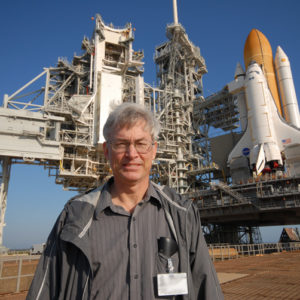
Ken Kremer and Jean Wright of Space UpClose attend rollback of NASA Artemis II on Feb. 25, 2026, to the VAB at NASA’s Kennedy Space Center in Florida. Credit: Ken Kremer / Space UpCloseKen Kremer and Jean Wright of Space UpClose attend rollback of NASA Artemis II on Feb. 25, 2026, to the VAB at NASA’s Kennedy Space Center in Florida. Credit: Ken Kremer / Space UpClose
Ken Kremer and Jean Wright of Space UpClose attend rollback of NASA Artemis II on Feb. 25, 2026, to the VAB at NASA’s Kennedy Space Center in Florida. Credit: Ken Kremer / Space UpClose
NASA’s Artemis II SLS rocket and Orion spacecraft rolls back Wednesday, Feb. 25, 2026, to the Vehicle Assembly Building at NASA’s Kennedy Space Center in Florida to fix flow of helium to rocket’s upper stage. Credit: Ken Kremer / Space UpClose
NASA’s Artemis II SLS (Space Launch System) rocket with the Orion spacecraft rolls back Wednesday, Feb. 25, 2026, to the Vehicle Assembly Building at NASA’s Kennedy Space Center in Florida to troubleshoot flow of helium to rocket’s interim cryogenic propulsion stage (ICPS) upper stage. Once complete SLS rocket will roll back to Launch Complex 39B to launch four astronauts around the Moon and back for Artemis II test flight. Credit: Ken Kremer / Space UpClose
Watch for Ken’s continuing onsite coverage of NASA, SpaceX, ULA, Boeing, Lockheed Martin, Northrop Grumman and more space and mission reports direct from Kennedy Space Center and Cape Canaveral Air Force Station in Florida and Wallops Flight Facility in Virginia. Stay tuned here for Ken's continuing Earth and Planetary science and human spaceflight news. Dr. Kremer is a research scientist and journalist based in the KSC area, active in outreach and interviewed regularly on TV and radio about space topics. Ken’s photos are for sale and he is available for lectures and outreach events.
TITUSVILLE, FL – Early risers lucky enough to gaze skyward witnessed a dazzling ‘Space Jellyfish’ illuminating the pre-dawn skies with stunning pastel colors flowing overhead following a SpaceX Falcon 9 launch of another batch of Starlink satellites from Florida’s Space Coast. Following liftoff of the SpaceX Falcon 9 at 5:52 a.m. ET on March 4, on the Starlink 10-40 mission
KENNEDY SPACE CENTER, FL – At a news conference at the Kennedy Space Center press site held on February 27, 2026, NASA Administrator Jared Isaacman announced sweeping changes to Project Artemis – increasing the flight cadence for the SLS and Orion moon rocket by adding another test flight to improve resiliency and reliability, as well as changing the goals of