

CAPE CANAVERAL SPACE FORCE STATION, FL – United Launch Alliance announced that a preliminary review of the flight data points to ‘Inadequate Fuel Supply’ to the 1st Stage BE-4 engines doomed their Vulcan rocket to ‘Low Booster Thrust’ resulting in the total launch failure and shocking setback following liftoff on Sunday, Nov. 15
The 50,000 pound payload of 40 Amazon Leo internet satellites were all lost when they failed to reach orbit and crashed into the ocean
“ULA has completed an initial integrated review of flight data from the Leo 1 launch anomaly that occurred last Sunday. While work remains to determine cause, preliminary indications are that the low booster thrust was the result of inadequate fuel supply from the vehicle to the BE-4 engines, not from the performance of the engines,” ULA announced in a statement, Wed. Nov. 18.
‘Booster’ is how ULA refers to their Vulcan rockets first stage
Ramifications are wide ranging since the Blue Origin built BE-4 engines on Vulcan are common to the Blue Origin New Glenn rocket first stage engines – which blew up on May 28 during a static fire test at pad 36
After a picture-perfect noontime liftoff Sunday, Nov. 15, and loaded with a heavy payload of 40 Amazon Leo internet satellites, United Launch Alliance suffered the staggering first total launch failure in the company’s history when the Vulcan Leo 1 rocket failed in flight
Following two days of delay for technical reasons, the 215 ft tall ULA Vulcan Amazon Leo 1 mission blasted off into beautiful blue skies on Sun., Nov. 15 at 12:40 p.m. EST (1732:30 UTC) from Space Launch Complex-41 at Cape Canaveral Space Force Station in Florida
Vulcan soared aloft on a combined 3.8 million pounds of liftoff thrust from the twin BE-4 liquid fueled LOX- methane engines and six Solid Rocket Boosters – with no hint of trouble
But sadly it was not to be a good day. And the outcome is catastrophic for ULA, NASA, the Space Force, Amazon Leo and other customers
Our lead photo by Ken Kremer shows all 8 first stage engines firing – just moments after liftoff – including the twin BE-4 liquid fueled engines and the six side mounted solid rocket boosters, SRBs, with a combined 3.8 million pounds of liftoff thrust
The FAA quickly grounded Vulcan and there will be a complete investigation into what went wrong
The other major components of Vulcan powered thrust – meaning the six SRBs and Centaur V upper stage appear to have performed well.
“As shared previously, the Vulcan second stage appears to have started nominally, and the RL10 engines were operating as planned. The second stage was performing well but was unable to recover from the performance loss resulting in loss of mission,” said ULA.
“All indications are that the solid rocket booster performance was nominal, following nozzle improvements implemented for this launch.”
“As the investigation continues, we will provide updates when there is information to share.”
This was the 1st of 38 planned ULA Leo satellite launches to low Earth orbit on Vulcan following ULA’s eight successful deployment missions using ULAs venerable Atlas V.
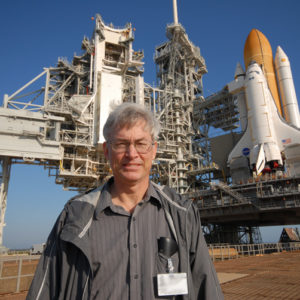
On Nov. 16 I was interviewed live on FOX 35 Orlando for my commentary and analysis about why the ULA Vulcan Amazon Leo 1 failed during its return to flight launch the day before at noontime on Sunday, Nov. 15.
Watch my complete live interview video on Fox 35 Orlando on Nov. 16 here titled: “ULA Vulcan Rocket fails on 1st of 38 Amazon launches”
https://fox35orlando.com/video/fmc-i3vwfrket6xyc1kw
Caption: ULA Vulcan Rocket fails on 1st of 38 Amazon launches. United Launch Alliance’s Vulcan Centaur rocket suffered an in-flight anomaly 10 minutes after liftoff from Cape Canaveral on Sunday, destroying 40 Amazon Leo internet satellites in ULA’s first-ever total mission failure. Ken Kremer, Managing Editor from Space UpClose, joined FOX 35’s Garrett Wymer live over Zoom on Nov. 16, 2026 to break down the latest.
x