

CAPE CANAVERAL SPACE FORCE STATION, FL – After a one day Friday the 13th delay due to ‘power interruptions’ and a lengthy grounding following the Feb 2026 launch anomaly the ULA Vulcan Centaur rocket is planned to lift off for only the fifth time on Saturday morning,Nov. 14, on the Leo 1 commercial mission for delivery of a heavy batch of broadband internet satellites for the Amazon Leo constellation to LEO from Florida’s Space Coast
Following the 24 hour delay liftoff of the 215 ft tall ULA Vulcan Leo 1 mission is now targeting Sat., Nov. 14 at 12:32:30 p.m. EST (1732:30 UTC) from Space Launch Complex-41 at Cape Canaveral Space Force Station in Florida
ULA delay statement:
“The launch of a United Launch Alliance Vulcan rocket carrying the Amazon Leo 1 mission is delayed due to a power interruption in the Air Liquide gaseous nitrogen (GN2) plant which resulted in the loss of their high-pressure pumps. Without confirmation of sustained commodity flow, the team has decided to realign the launch to the back-up opportunity on Sat., Nov. 14 at 12:32:30 p.m. EST (1732:30 UTC). The vehicle and spacecraft are healthy.”
The window extends 29 minutes for this return-to-flight mission delayed by 9 months to fix the Feb 12 anomaly with the SRB booster nozzles seen on the fourth flight on a national security mission and the second flight.
Both Vulcan launches ultimately succeeded in placing their payloads in orbit with extra help from the first and second stage liquid fueled engines
The nozzles have been redesigned but may require further modifications depending on the outcome
Thereafter the US Space Force paused all national security launches from Vulcan
The payload comprises 40 Amazon Leo broadband internet satellites for Amazon Leo
Today’s forecast shows a 90 percent chance of favorable weather conditions for launch.
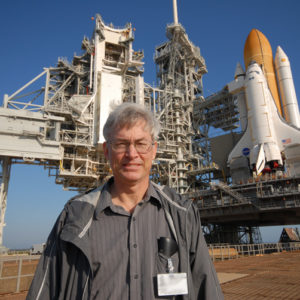
Enjoy our prelaunch photos from the Space UpClose team of Ken Kremer and Jean Wright – taken on an overcast Thursday afternoon, Nov. 12, during our media remote camera setup
Vulcan Leo 1 will launch in the most powerful version of the rocket with 6 SRBs & an extended 70 ft nose cone and LEO optimized Centaur upper stage for Amazon Leo
Payload: 40 broadband high speed internet Amazon Leo sats delivered to LEO low Earth orbit at approx 285 mi altitude (460 km) at 51.9 degree inclination
The satellites will start being deployed about 70 minutes after liftoff in 16 separation events lasting about 25 minutes, says ULA
Amazon Leo is a direct competitor to SpaceX Starlink
Payload weight = 50,000 lbs or 22,700 kg
Rocket will fly on a NE trajectory
1st Vulcan launch since Feb 2026 grounding after anomaly with SRB nozzles fracturing
1st of 38 planned ULA Leo launches
The first stage BE-4 engines also had to be retrofitted after they are common to the Blue Origin New Glenn rocket that exploded on May 28 at pad 36 during a static fire test
Thus there is some uncertainty with all of the first stage engines and some risk involved