Gorgeous Full ‘Snow’ Moon rising by NASA Artemis II SLS/Orion Moonshot rocket at Launch Complex 39B at NASA’s Kennedy Space Center – just past sunset around 6 PM Feb. 1, 2026 with WDR cryogenic propellant loading and simulated countdown in progress. Artemis II could launch 4 humans to the moon as soon as Feb. 8 on first crewed Moonshot in >50 years- if all goes well! Simulated WDR countdown continues since starting at 813 PM ET Jan. 31. Credit: Ken Kremer / Space UpClose
KENNEDY SPACE CENTER/TITUSVILLE/CAPE CANAVERAL, FL – We had a few opportunities to photograph NASA’s Artemis II moon rocket from locations on the Kennedy Space Center as well as off site from Titusville along the Indian River lagoon – as the 2-day long Wet Dress Rehearsal (WDR) cryogenic fueling and simulated countdown was in progress since the evening of Jan. 31.
The WDR was expected to conclude around 830 PM ET on Feb. 2 – with a 4 hour window to account for any technical delays – but was ultimately aborted as incomplete around 2 AM ET on Feb. 3.
Gorgeous Full ‘Snow’ Moon rising by NASA Artemis II SLS/Orion Moonshot rocket at Launch Complex 39B at NASA’s Kennedy Space Center – just past sunset around 6 PM Feb. 1, 2026 with WDR cryogenic propellant loading and simulated countdown in progress. Artemis II could launch 4 humans to the moon as soon as Feb. 8 on first crewed Moonshot in >50 years- if all goes well! Rising moon casts stunning water reflection as simulated WDR countdown continues since starting at 813 PM ET Jan. 31. Credit: Ken Kremer / Space UpClose
We also photographed Moonrises for several days after the WDR loading cryogenics LOX and LH2 was halted prematurely at T Minus 5 minutes in the Terminal Countdown – due to a continuing series of excessive gaseous hydrogen leaks above the allowable 16% by volume level in the TSMU at the base of the rocket.
TSMU UpClose showing Hydrogen leak location. This upclose view shows the pair of TSMU Tail Service Mast Umbilicals at the base of NASA’s Artemis II Space Launch System (SLS) rocket and Orion spacecraft as they rolled out from NASA’s Vehicle Assembly Building (VAB) atop NASA’s crawler-transporter 2 (CT-2) to Launch Complex 39B, on Saturday, Jan. 17, 2026, at NASA’s Kennedy Space Center in Florida. Cryogenic propellants LH2 and LOX are loaded into the core stage and upper stage via the TSMU. Serious hydrogen gas leaks were detected during the Feb 2, 2026 WDR fueling test which then had to be aborted. Artemis II is a test flight to send 4 astronauts on a historic lunar flyby to the moon and back launching NET Early February 2026. Credit: Ken Kremer / Space UpClose
Hydrogen is extremely flammable and could lead to a fire and explosion with disastrous catastrophic consequences for the rocket and crew of 4 – if they were onboard during a real countdown
NASA’s Artemis II mega moon rocket will launch the first humans to the Moon in over 40 years since Apollo 17 back in Dec. 1972.
Gorgeous 96% Full Moon rising by NASA Artemis II SLS/Orion Moonshot rocket at Launch Complex 39B at NASA’s Kennedy Space Center – just past sunset Feb. 3, 2026 from Titusville, FL – along the Indian River Lagoon. WDR cryogenic propellant loading and simulated countdown aborted. Artemis II could launch 4 humans to the moon as soon as March 6 on first crewed Moonshot in >50 years- if all goes well! Rising moon casts stunning water reflection. Credit: Ken Kremer / Space UpClose
NASA had been targeting liftoff Feb. 8 until the WDR was aborted after the countdown was paused multiple times for Hydrogen leaks. In the end the launch team was able to fully fuel the rocket with LOX and LH2 to the 100% level with replenish for several hours
Launch now slips to NET March 6 with a launch period extending to March 11
Gorgeous 96% Full Moon rising by NASA Artemis II SLS/Orion Moonshot rocket at Launch Complex 39B at NASA’s Kennedy Space Center – just past sunset Feb. 3, 2026 from Titusville, FL – along the Indian River Lagoon. WDR cryogenic propellant loading and simulated countdown aborted. Artemis II could launch 4 humans to the moon as soon as March 6 on first crewed Moonshot in >50 years- if all goes well! Rising moon casts stunning water reflection. Credit: Ken Kremer / Space UpClose
Enjoy our gallery of photos taken for Space UpClose by Ken Kremer and Jean Wright
Gorgeous 96% Full Moon rising by NASA Artemis II SLS/Orion Moonshot rocket at Launch Complex 39B at NASA’s Kennedy Space Center – just past sunset Feb. 3, 2026 from Titusville, FL – along the Indian River Lagoon. Credit: Jean Wright / Space UpClose
NASA arranged 2 media photo ops on Feb. 1 early in the morning for a pre-sunrise moonset. Then another at post-sunset moonrise – both during the WDR in progress
With WDR simulated countdown in progress for NASA Artemis II Moonshot rocket from we media photographed the setting moon behind the rocket stack from about 430 AM to 530 AM ET the morning of Feb. 1 at the media photo op with 27 degree F temperature!!
We’re all loving the fantastic opportunity despite the coldest Florida Space Coast weather in years!!
The second photo op took place past sunset around 6 PM the evening of Feb. 1.
Gorgeous Full ‘Snow’ Moon rising by NASA Artemis II SLS/Orion Moonshot rocket at Launch Complex 39B at NASA’s Kennedy Space Center – just past sunset around 6 PM Feb. 1, 2026 with WDR cryogenic propellant loading and simulated countdown in progress. Artemis II could launch 4 humans to the moon as soon as Feb. 8 on first crewed Moonshot in >50 years- if all goes well! Rising moon casts stunning water reflection as simulated WDR countdown continues since starting at 813 PM ET Jan. 31. Credit: Ken Kremer / Space UpClose
The rising moon cast a stunning water reflection at out location nearby the Apollo-Saturn Center of the KSC Visitor Complex – as the simulated WDR countdown continued since starting aound 813 PM ET Jan 31 at pad 39B at NASA’s Kennedy Space Center.
Liftoff was NET Feb 8 if the WDR had gone perfect – which it ultimately did not.
The WDR was moved forward and back multiple times due to several spouts of the coldest weather hitting Central Florida and the Florida Space Coast in many years!!
Finally we watched on our own off-site as the nearly Full Moon was ascending over NASA Artemis II Moon rocket on the evening of Feb. 3 from Titusville, FL – along the Indian River Lagoon.
The Moon was a 96% Waning Gibbous on Feb. 3.
One last opportunity to catch moonrise with Artemis II afforded itself on Feb. 4 at Space View Park near the Max Brewer Bridge in Titusville around 9 PM ET.
NASA Artemis II with rising 90% moon and Max Brewer Bridge at Space View Park pier reflecting in the Indian River lagoon, Titusville. After 9 pm Feb 4, 2026. Simple cell phone shots – wide views show the bridge and pier. Liftoff net March 6. Credit: Ken Kremer / Space UpClose
During the WDR, NASA launch and pad teams also experienced problems with communication difficulties, Orion hatch closure, cold temps and other issues
Gorgeous Full ‘Snow’ Moon rising by NASA Artemis II SLS/Orion Moonshot rocket at Launch Complex 39B at NASA’s Kennedy Space Center – just past sunset around 6 PM Feb. 1, 2026 with WDR cryogenic propellant loading and simulated countdown in progress. Artemis II could launch 4 humans to the moon as soon as Feb. 8 on first crewed Moonshot in >50 years- if all goes well! Simulated WDR countdown continues since starting at 813 PM ET Jan. 31. Credit: Ken Kremer / Space UpClose
NASA ultimately scrubbed the test on early overnight Feb. 3 after 2 AM and reset launch to NET early March.
The new date is TBD and NASA stated another WDR must be run before any attempt at launching Artemis II
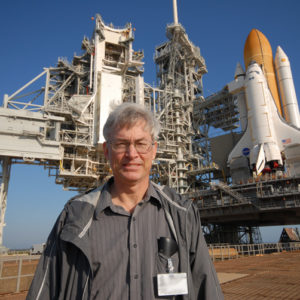
Ken Kremer of Space UpClose with backdrop of Full ‘Snow’ Moon setting above NASA Artemis II SLS/Orion Moonshot rocket at Launch Complex 39B at NASA’s Kennedy Space Center – early Feb. 1, 2026 with sub freezing 27 degree temperature with WDR cryogenic propellant loading and simulated countdown in progress. Artemis II could launch 4 humans to the moon as soon as Feb. 8 on first crewed Moonshot in >50 years- if all goes well. Credit: Ken Kremer / Space UpClose
Gorgeous Full ‘Snow’ Moon rising by NASA Artemis II SLS/Orion Moonshot rocket at Launch Complex 39B at NASA’s Kennedy Space Center – just past sunset around 6 PM Feb. 1, 2026 with WDR cryogenic propellant loading and simulated countdown in progress. Artemis II could launch 4 humans to the moon as soon as Feb. 8 on first crewed Moonshot in >50 years- if all goes well! Rising moon casts stunning water reflection as simulated WDR countdown continues since starting at 813 PM ET Jan. 31. Credit: Ken Kremer / Space UpCloseGorgeous 96% Full Moon rising by NASA Artemis II SLS/Orion Moonshot rocket at Launch Complex 39B at NASA’s Kennedy Space Center – just past sunset Feb. 3, 2026 from Titusville, FL – along the Indian River Lagoon. WDR cryogenic propellant loading and simulated countdown aborted. Artemis II could launch 4 humans to the moon as soon as March 6 on first crewed Moonshot in >50 years- if all goes well! Rising moon casts stunning water reflection. Credit: Ken Kremer / Space UpCloseFull ‘Snow’ Moon setting above NASA Artemis II SLS/Orion Moonshot rocket at Launch Complex 39B at NASA’s Kennedy Space Center – early Feb. 1, 2026 with WDR cryogenic propellant loading and simulated countdown in progress. Artemis II could launch 4 humans to the moon as soon as Feb. 8 on first crewed Moonshot in >50 years- if all goes well. Credit: Ken Kremer / Space UpCloseGorgeous Full ‘Snow’ Moon rising by NASA Artemis II SLS/Orion Moonshot rocket at Launch Complex 39B at NASA’s Kennedy Space Center – just past sunset around 6 PM Feb. 1, 2026 with WDR cryogenic propellant loading and simulated countdown in progress. Artemis II could launch 4 humans to the moon as soon as Feb. 8 on first crewed Moonshot in >50 years- if all goes well! Rising moon casts stunning water reflection as simulated WDR countdown continues since starting at 813 PM ET Jan. 31. Credit: Ken Kremer / Space UpCloseSeveral spectators join Ken Kremer and Jean Wright of Space UpClose watching Gorgeous 96% Full Moon rising by NASA Artemis II SLS/Orion Moonshot rocket at Launch Complex 39B at NASA’s Kennedy Space Center – just past sunset Feb. 3, 2026 from Titusville, FL – along the Indian River Lagoon. WDR cryogenic propellant loading and simulated countdown aborted. Artemis II could launch 4 humans to the moon as soon as March 6 on first crewed Moonshot in >50 years- if all goes well! Rising moon casts stunning water reflection. Credit: Ken Kremer / Space UpClose
Several spectators join Ken Kremer and Jean Wright of Space UpClose watching Gorgeous 96% Full Moon rising by NASA Artemis II SLS/Orion Moonshot rocket at Launch Complex 39B at NASA’s Kennedy Space Center – just past sunset Feb. 3, 2026 from Titusville, FL – along the Indian River Lagoon. WDR cryogenic propellant loading and simulated countdown aborted. Artemis II could launch 4 humans to the moon as soon as March 6 on first crewed Moonshot in >50 years- if all goes well! Rising moon casts stunning water reflection. Credit: Ken Kremer / Space UpCloseNASA Artemis II with rising 90% moon and Max Brewer Bridge at Space View Park pier reflecting in the Indian River lagoon, Titusville. After 9 pm Feb 4, 2026. Simple cell phone shots – wide views show the bridge and pier. Liftoff net March 6. Credit: Ken Kremer / Space UpClose
Watch for Ken’s continuing onsite coverage of NASA, SpaceX, ULA, Boeing, Lockheed Martin, Northrop Grumman and more space and mission reports direct from Kennedy Space Center and Cape Canaveral Air Force Station in Florida and Wallops Flight Facility in Virginia. Stay tuned here for Ken's continuing Earth and Planetary science and human spaceflight news. Dr. Kremer is a research scientist and journalist based in the KSC area, active in outreach and interviewed regularly on TV and radio about space topics. Ken’s photos are for sale and he is available for lectures and outreach events.
KENNEDY SPACE CENTER, FL – At a news conference at the Kennedy Space Center press site held on February 27, 2026, NASA Administrator Jared Isaacman announced sweeping changes to Project Artemis – increasing the flight cadence for the SLS and Orion moon rocket by adding another test flight to improve resiliency and reliability, as well as changing the goals of
KENNEDY SPACE CENTER, FL – At a news conference at the Kennedy Space Center press site held on Feb. 27, new NASA Administrator Jared Isaacman announced sweeping changes to Project Artemis – increasing the flight cadence for the SLS and Orion moon rocket by adding more test flights to improve resiliency and reliability as well as changing the mission goals.