

TITUSVILLE, FL – After a days delay due to an unexplained last moment abort, SpaceX successfully launch another batch of thie Starlink broadband internet satellites to low Earth orbit (LEO) on a cloudy Friday morning from the Florida Space Coast
On Friday, August 21, 2026 at 11:04 a.m. ET (1514 UTC), Falcon 9 launched 29 Starlink satellites to low-Earth orbit from Space Launch Complex 40 (SLC-40) at Cape Canaveral Space Force Station in Florida.
On Thursday a hold was called in the final moments at about 23 seconds before blastoff. SpaceX did not elaborate as to why
The recycled rocket roared off pad 40 on the Starlink 10-39 mission into thick clouds that obscured viewing soon after liftoff as it soared on a northeasterly trajectory along the US east coast.
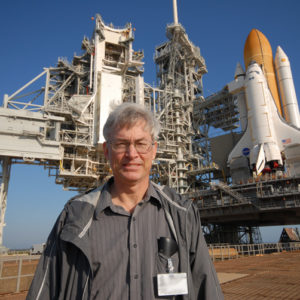
Enjoy the photos by Jean Wright taken for Space UpClose
This was the 30th flight for the first stage booster B1078.30 supporting this mission, which previously launched Crew-6, SES O3b mPOWER-B, USSF-124, BlueBird 1-5, Nusantara Lima (PSN N5), Starfall Demo, and now 24 Starlink missions.
Following stage separation, the first stage landed on the A Shortfall of Gravitas droneship (ASOG) , which was stationed in the Atlantic Ocean about 400 miles down range off the coast of the Carolina.
SpaceX is maintaining a launch cadence of roughly every 5 days. Constrained by the fact they only have one drone ship
They can also land occasionally back at the Cape using landing pads at pad LZ-40 and LZ-2
To date six Falcon 9 boosters have achieved 30 or more launches
This marks the 164th landing on ASOG and the remarkable 652nd landing to date for SpaceX
SpaceX has launched over 11,000 Starlink satellite to orbit to date
x